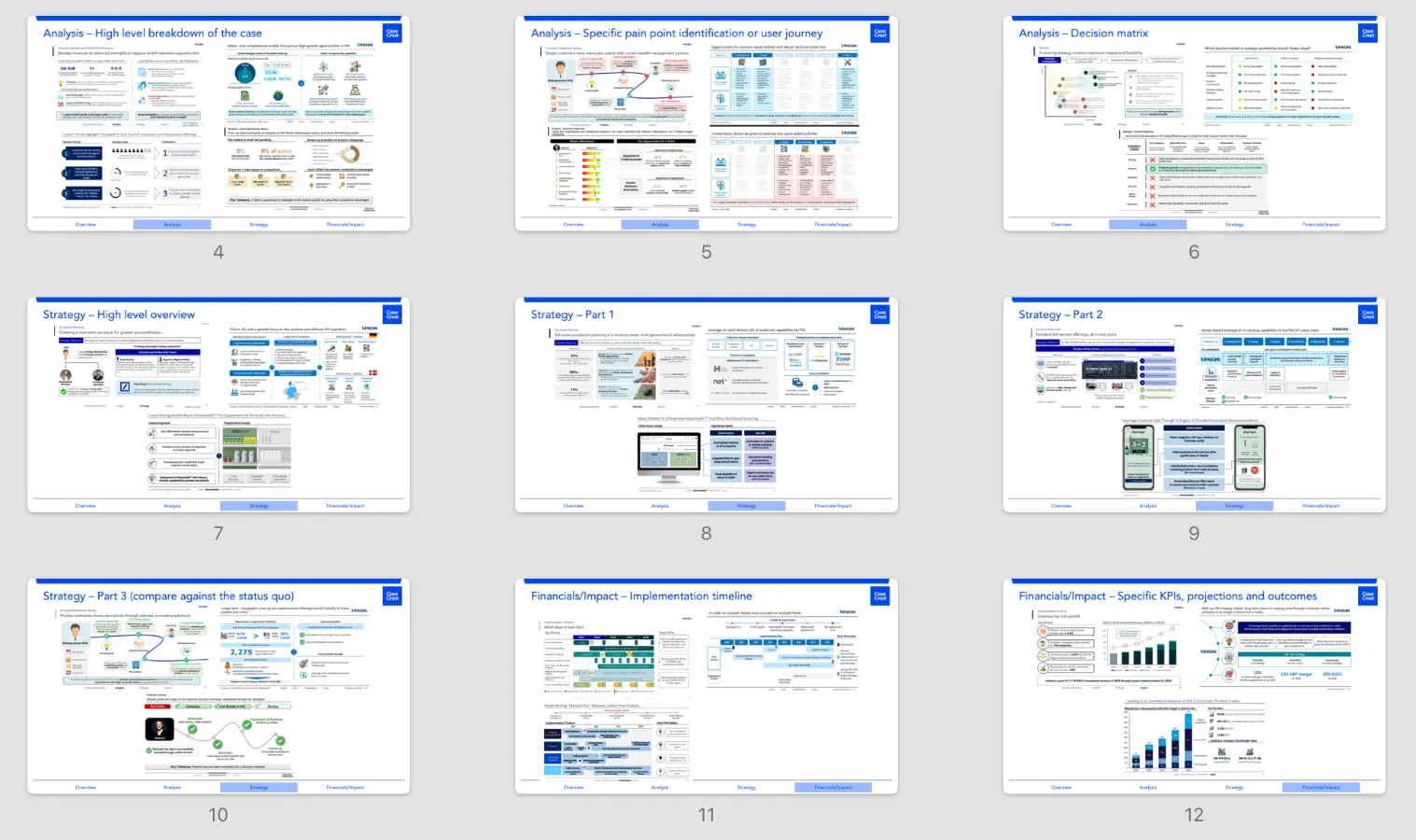
Case Competitions have different "flavours" but generally follow a consistent structure of analysis -> strategy -> implementation/financials which we will explore below.
Neeraj Subbanna•Aug 11, 2026•4 min read
Structuring your case competition slide deck in the "analysis -> strategy -> implementations/financials" method provides a familiar and clear framework for judges to mark but also for you as a competitor to create a thorough and effective slide deck.
Part 1 - Analysis:
As the name suggests, it means breaking down the problem into it’s various parts. You want to understand and read the case brief thoroughly to understand and note down key considerations, criteria, factors to consider. Often there will be clues in the case brief guiding you.
Converting your technical analysis into the presentation is key, you want to essentially show how you went about breaking down the problem and there are multiple more advanced guides to go about this. We recommend following our Exemplar/Winning Slide Examples template to help you guide what exactly the slides should contain.
Part 2 - Strategy:
Also as the name suggest this is where you create a solution to the problem identified. Thinking systematically and doing the analysis first before fully understanding the problem will give a poor result so make sure you do your analysis!
Brainstorm ideas with your team, give everyone a set time to think independently and write down all the ideas onto sticky notes. Then combine them together and discuss with each other. You’ll likely find you have similar ideas with each other so bucketing them together will keep things moving and organised.
There is a concept that ideas have babies…or something along those lines but basically ideas come together to form better ideas. Reid Hoffman founder off LinkedIn talks about the concept of the human cloud, I think of this like a human server - mapping, organising and collating ideas together centrally in one place so everyone can contribute and make things better.
It helps to have a team leader elected as you don’t want to get stuck too long debating ideas with each other, a key learning lesson in your career and why case comps are great is it teaches you how to manage healthy conflict! Especially when you all have great ideas and need to narrow it down it to one or two.
Translating this into your presentation is very similar to analysis, often you’ll have two people work on the first and second part of the same strategy as of course your solution will take up 50% of your time.
A really important albeit difficult role, but don’t let that intimidate you. Those of you who want to work in finance or prefer crunching numbers - this ones for you.
The goal here is translate ideas into qualitative data and objective plans. This is great for those who are bit more grounded in how things get done. We will provide a range of financial templates for you to use, whether it be capex (capital expenditure like buying a truck), opex (operational expenditure like hiring staff) and so on. Whether you’re implementing a marketing strategy or a AI efficiency strategy, there will be costs and hopefully revenue or impact (depends what your analysis and case reveals).
It’s important you map your numbers to reality, you use industry averages and definitely leverage AI tools to help guide what implementing certain strategies require. I don’t want to burst your bubble, but most if not all business ideas have been implemented in some capacity and there is alot of data out there that will help you.
You also need to look at timelines around implementation - as the five P’s tell you: Proper Planning Prevents Piss Poor Performance. Just like any good plan, in-depth dates, goals, targets all ensure we’re working towards a goal.
You should also identify, risk and their appropriate mitigations, include supporting studies and data to back up assumptions and claims you make.
Voila, you’ve now completed your first case comp (or maybe your second or third) but with a lot more structure, confidence and a better end product where you would have learnt:
How to work in teams and manage conflict
Breakdown large and complex problems then solve them (under pressure)
Create a presentation which will have honed your slide making and presentation skills
A greater understanding of how solving problems work
Maybe a prize and definitely something to include in your resume employers love to see